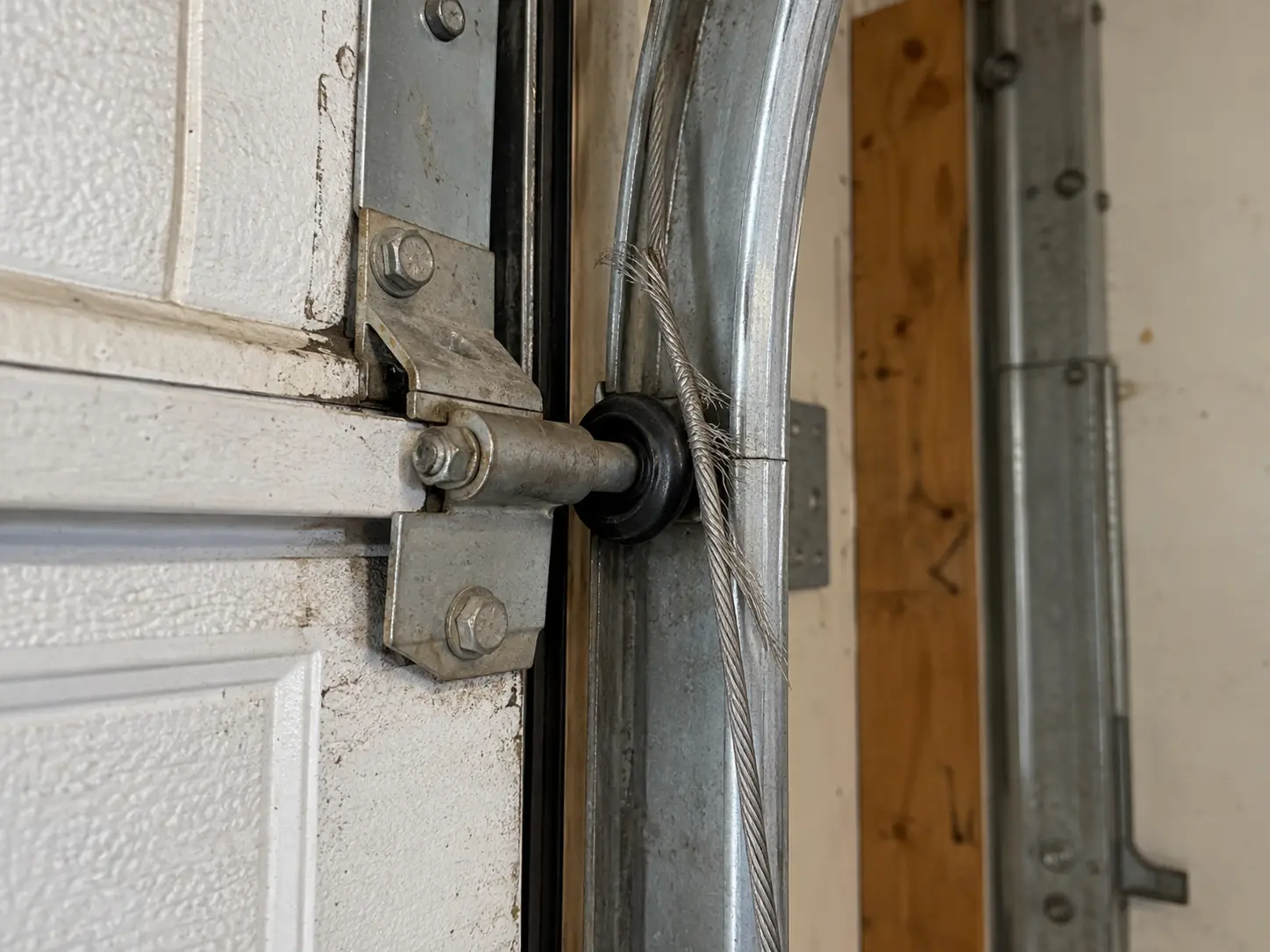
Garage Door Track and Roller Repair in Little Elm, TX
Does your garage door shake going up, scrape on one side, catch in the same spot, or come off track? Request garage door track and roller repair in Little Elm, TX 75068 for worn rollers, bent tracks, loose hardware, binding movement, and related cable or spring-balance problems.
Track and Roller Problems
Signs Your Garage Door Tracks or Rollers Need Attention
You do not need to know the exact failed part before requesting help. The useful details are what the door is doing: scraping, shaking, catching, coming out of the track, or moving unevenly.
Off-Track Door
What to Do If Your Garage Door Comes Off Track
If a roller has jumped the track or the door is hanging at an angle, stop using the opener. Repeated button presses can bend track, pull cables loose, damage panels, or place extra strain on the spring system.
Stop Operating the Door
Do not keep trying to open or close the door if it is crooked, jammed, or partly out of the track. The opener is not designed to force a door through a mechanical bind.
Keep the Area Clear
Keep vehicles, children, pets, and stored items away from the door until it is checked. A shifted door can move unexpectedly if tension changes.
Describe What Happened
Mention whether the door was hit, caught on an object, made a loud noise, lifted unevenly, or showed a loose cable before it came off track.
Finding the Cause
Track Damage, Worn Rollers, or Another Door Problem?
A noisy or uneven garage door is not always a roller-only problem. The tracks guide the door, the rollers carry movement, and the cables and springs help keep the door balanced.
Bent, Loose, or Misaligned Tracks
Vertical and horizontal tracks guide the rollers as the door moves. If a track is bent, loose, shifted, or rubbing against the door, the door may scrape, bind, or stop in the same place.
Worn or Damaged Rollers
Rollers can become noisy, cracked, loose, or difficult to move. Worn bearings, damaged stems, or the wrong roller type can make the door shake or travel roughly.
Cable and Spring Issues
A door that moves crooked or comes out of the track may also have a loose cable, shifted drum, spring balance problem, or damaged hinge. Those related parts should be checked before deciding the repair.
Noisy or Binding Door
Why Your Garage Door Grinds, Shakes, or Gets Stuck
Grinding, shaking, and binding usually mean the door is meeting resistance somewhere in the system. The goal is to identify whether the resistance comes from the rollers, track alignment, hinges, door balance, or impact damage.
Roller Wear and Bearing Problems
Rollers travel through the track every time the door opens and closes. Over time, worn wheels or rough bearings can create vibration, noise, uneven travel, or a door that feels less smooth.
Track Alignment and Mounting Problems
A track can shift if mounting hardware loosens or if the door has been forced while stuck. Misalignment can cause rubbing, scraping, or a tight spot in the same part of the travel.
Impact Damage and Obstructions
A vehicle bump, stored item, bent section, or object caught near the track can change how the door moves. Mentioning what happened before the problem started helps narrow the cause.
Repair Assessment
What a Track and Roller Assessment Should Check
Track and roller repair should not be based on noise alone. The complete door path should be checked so the recommendation explains what failed, what caused the issue, and what should be repaired.
Track Condition and Hardware
The inspection should review vertical tracks, horizontal tracks, curved track sections, brackets, fasteners, rubbing marks, and visible bends or gaps.
Rollers, Hinges, and Door Sections
Rollers should be checked for worn wheels, damaged stems, rough movement, and proper fit. Hinges and panels should also be reviewed because they affect roller position.
Door Balance and Opener Operation
Springs, cables, and opener behavior can affect how the door travels. A binding door may make the opener strain, reverse, or stop before the real cause is corrected.
Repair Options
Track Adjustment, Track Replacement, or New Rollers?
The right repair depends on the condition of the track, rollers, hinges, cables, and door sections. A clear recommendation should separate what is necessary from what is optional.
When Track Adjustment May Be Suitable
Adjustment may be suitable when the track is still structurally sound but has shifted, loosened, or moved out of alignment. The reason it moved should still be identified.
When Damaged Track May Need Replacement
Replacement may be considered when a track section is badly bent, cracked, crushed, or no longer able to guide the rollers safely through the door path.
When Roller Replacement May Be Appropriate
Roller replacement may be appropriate when wheels are cracked, bearings are rough, stems are damaged, or the rollers are not a proper fit for the door system.
Roller Fit
Choosing Replacement Rollers for Your Garage Door
Replacement rollers should match the door system, track size, and hardware condition. The best choice is not only about noise level; fit, movement, and compatibility matter.
Nylon and Steel Roller Options
Garage doors may use nylon or steel rollers, with different bearing styles and durability considerations. The right option depends on the existing door, track, usage, and repair goal.
Correct Size and Stem Fit
Roller diameter, stem length, bearing condition, and hinge compatibility should be checked. The wrong roller can create poor movement even if it looks similar.
Before Approval
What to Confirm Before Approving Track and Roller Work
Before work begins, make sure the explanation connects the visible symptom to the actual repair recommendation.
Garage Door Track and Roller Repair FAQs
Need Help With a Noisy or Off-Track Garage Door in Little Elm?
Tell us what the door is doing: shaking going up, scraping on one side, catching halfway, or showing a roller outside the track. Provide your Little Elm service address and confirm coverage, availability, and the attending provider before scheduling.