Garage Door Panel Repair in Little Elm, TX
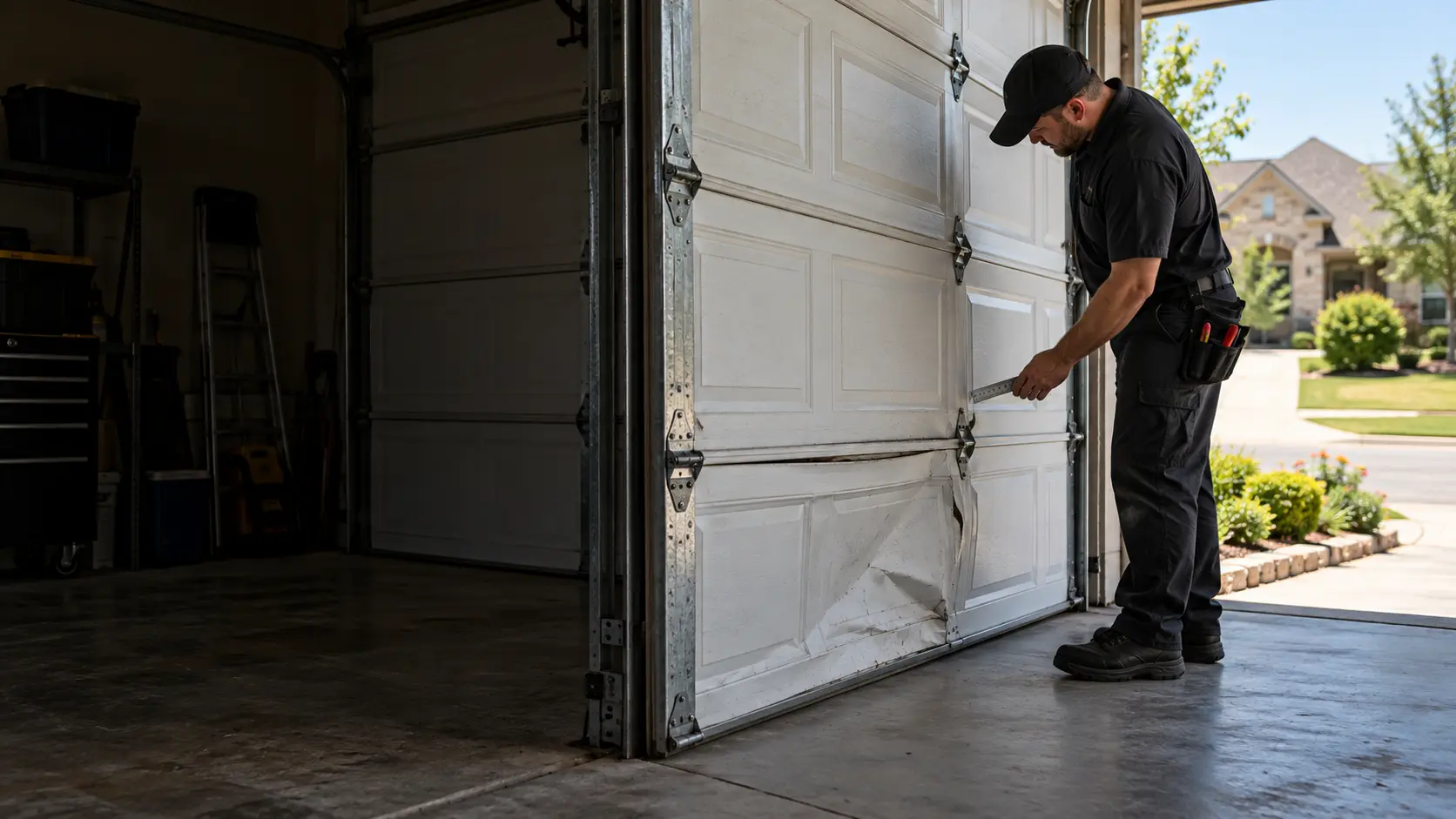
A dented, bent, or cracked garage door panel can affect more than appearance. If the door catches, closes unevenly, leaves gaps, or makes new noises after an impact, request garage door panel repair in Little Elm, TX 75068. We help check the damaged section, hinges, rollers, tracks, and whether repair or replacement is the better option.
Panel Damage Signs
Signs Your Garage Door Panels Need Attention
A damaged garage door panel can affect more than appearance. A dent, crease, cracked section, or bent bottom panel may change how the door moves through the tracks, seals at the floor, and works with the opener.
Complete Door System
Garage Door Panel Damage Can Affect the Whole System
Garage door sections move as part of a connected system. When one panel is bent or weakened, it can place extra stress on nearby hinges, rollers, tracks, cables, and the opener.
Dents, Creases, and Door Movement
A shallow dent may be mostly cosmetic, but a sharp crease or bowed section can cause the door to bind, shake, or sit unevenly. The affected area should be checked where the section moves through the curved track.
Bottom Section and Weather Sealing
The bottom panel carries the weather seal and often takes the most contact from driveways, water, sunlight, and accidental bumps. If the section is distorted, replacing only the rubber seal may not correct the gap.
Hinges, Brackets, and Attachment Points
Impact damage can loosen hinge fasteners, bend roller brackets, or weaken the mounting area. A proper repair recommendation should look beyond the surface dent and explain whether the attachment points are still sound.
Repair Decision
Can One Garage Door Panel Be Replaced?
In some cases, one garage door section can be replaced without replacing the entire door. The right option depends on panel availability, section condition, hardware condition, and whether the replacement will match the existing door.
Matching the Existing Door
A replacement section should match the door size, model, panel profile, material, insulation, window layout, texture, and finish as closely as possible. Older doors may show color differences because of sun exposure and weathering.
Checking the Remaining Sections
Panel replacement may be suitable when the other sections are structurally sound and the hinges, tracks, rollers, cables, and opener are still serviceable. Widespread damage may change the recommendation.
Replacement Panel Availability
Some older garage door sections are discontinued or difficult to match. The manufacturer, door model, dimensions, and panel design should be identified before approving a single-section replacement.
What Should Be Checked
What a Garage Door Panel Assessment Should Include
A panel repair estimate should explain what failed, whether the door is safe to operate, and which related parts are affected by the damage.
Panel Condition and Structural Strength
The assessment should separate cosmetic damage from structural damage. Cracks, creases, corrosion, bent edges, and weakened hinge areas can affect whether repair or replacement is practical.
Hinges, Rollers, and Tracks
If the door started binding, scraping, shaking, or moving unevenly after the panel was hit, the surrounding hardware should be checked before the door is used again.
Cables, Balance, and Opener Strain
A crooked or unusually heavy door may involve more than the damaged panel. Cable tension, spring balance, drum position, and opener strain should be considered when the door does not move normally.
Clear Repair Scope
The written scope should explain whether the recommendation is panel repair, reinforcement, one-section replacement, or full door replacement, and which parts are required versus optional.
Repair Options
Panel Repair, Reinforcement, or Replacement
Not every damaged panel needs the same fix. The best recommendation should match the condition of the section, the door system, and the long-term safety of the repair.
Repair May Suit Limited Damage
Repair may be possible when the panel is still structurally sound, the hinge areas are secure, and the door opens and closes correctly after adjustment. Cosmetic improvement does not always restore original strength.
Reinforcement Has a Specific Purpose
A reinforcement strut may help support a section in certain situations, but it should not be used as a shortcut for failed mounting points, severe bending, or damage that makes the door unsafe to operate.
Replacement May Be the Better Option
Section replacement may be considered when one panel is beyond practical repair, a compatible section is available, and the rest of the door system remains in usable condition.
Little Elm Panel Issues
Common Panel Concerns for Little Elm Homeowners
Homes in Little Elm and 75068 often deal with daily door cycles, driveway contact, heat, storms, moisture, and sunlight. These conditions can affect how panels look, seal, and move over time.
Vehicle Contact and Driveway Impacts
A door hit while closed or partially open may look like a simple dent, but it can also shift hinges, bend the section edge, pull rollers out of position, or make the door catch when it moves.
Storm Damage and Exposed Surfaces
Wind, moisture, and debris can leave dents, gaps, damaged seals, or weakened lower sections. The timing of a storm helps explain the concern, but the door still needs a physical assessment.
Bottom Gaps and Everyday Wear
A gap under the door may come from a worn bottom seal, a bent bottom panel, track movement, opener settings, or the shape of the garage floor. The cause should be identified before parts are replaced.
Before Approval
From Your Request to a Clear Panel Repair Decision
A good panel repair process should help you understand the damage, confirm what can remain in use, and approve only the work that makes sense for the door.
Describe the Damage and Location
Share your Little Elm address, which section is damaged, whether the door was hit, and what changed afterward, such as new scraping, shaking, gaps, or uneven movement.
Confirm Coverage and Availability
Confirm that help is available for your address in 75068 and ask for the next appointment window before approving any visit or repair recommendation.
Review the Findings and Written Scope
The explanation should identify the affected panel, related hardware, compatibility concerns, and whether the repair is required for safe operation or mainly cosmetic.
Approve the Work and Confirm Operation
Before work begins, confirm the scope, warranty terms, and what could change the recommendation. After repair, the door should be tested for smooth movement and safe operation.
Smart Questions
Questions to Ask Before Approving Panel Work
These questions help separate cosmetic work from necessary repair and make the recommendation easier to understand.
Garage Door Panel Repair FAQs
Need Help With a Damaged Garage Door Panel in Little Elm?
Describe the damaged section and whether the door is catching, closing unevenly, or making new noises. Confirm coverage for your Little Elm address in 75068 and request an assessment of the panel and related hardware.