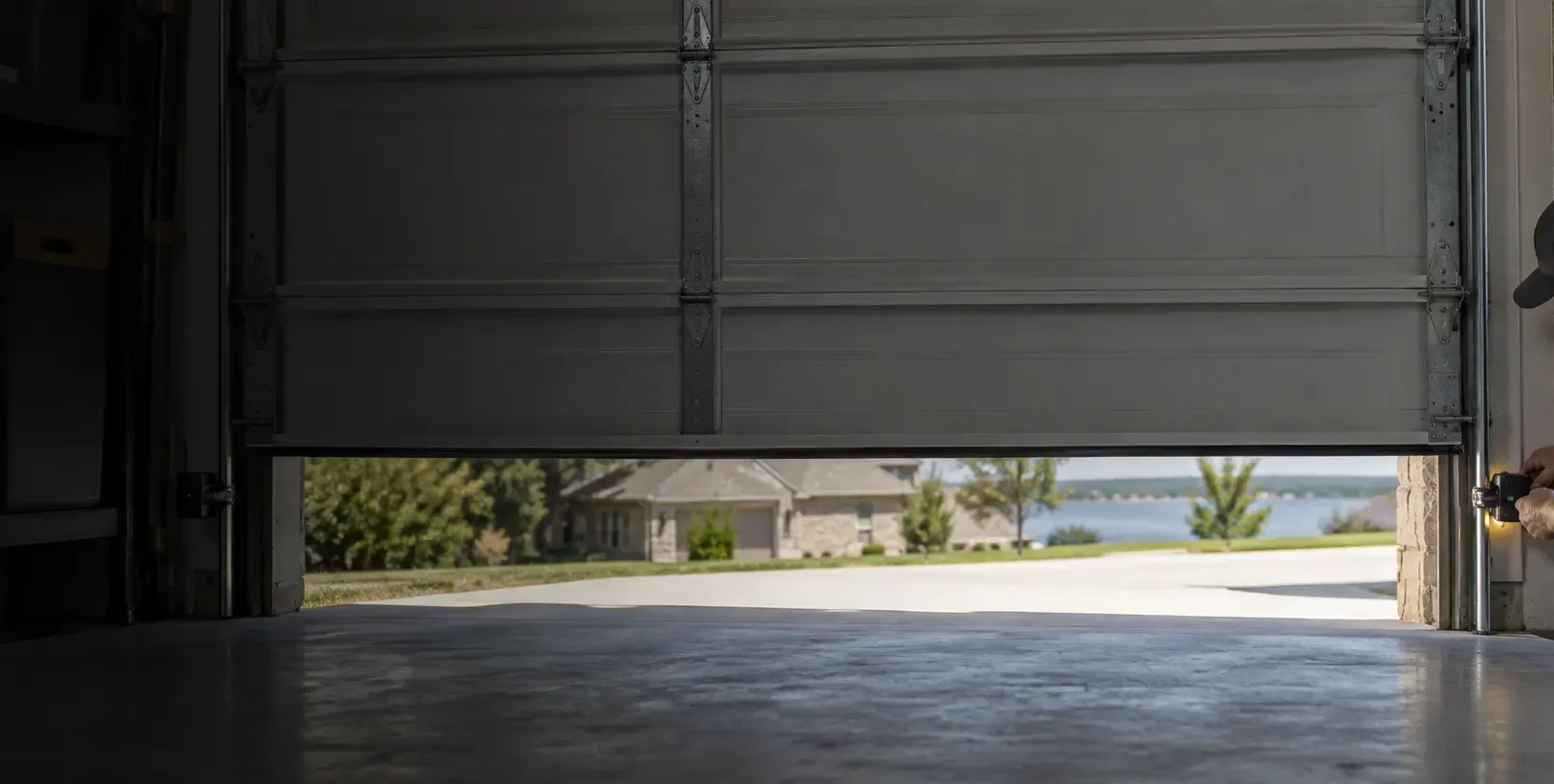
Garage Door Safety Sensor Repair in Little Elm, TX
Does your garage door open normally but refuse to close, start down and reverse, or work only sometimes? Request garage door safety sensor repair in Little Elm, TX 75068 for blocked photo eyes, sensor misalignment, loose wiring, sunlight interference, and compatible replacement sensor issues.
Closing Problems
Signs Your Garage Door Safety Sensors Need Attention
Photo-eye safety sensors monitor a beam across the garage door opening. If that beam is interrupted or the opener cannot detect it correctly, the door may refuse to close or reverse during closing.
A symptom is a starting point: Reversing or refusing to close does not prove that a sensor has failed. Track resistance, travel settings, and other opener problems can produce similar behavior.
Finding the Cause
Common Causes of Garage Door Sensor Problems
A closing problem does not automatically require new sensors. The beam path, mounting brackets, wiring, and operating conditions should be checked before parts are recommended.
Blocked or Dirty Sensor Lenses
Storage boxes, tools, leaves, or other objects can interrupt the beam. Dust and cobwebs on the lenses can also interfere with the signal, even when the doorway looks clear.
Misalignment and Loose Brackets
A bumped sensor or loose mounting bracket can stop the photo eyes from facing each other correctly. Movement during operation may reveal an alignment problem that is less obvious while the door is stationary.
Damaged Wiring or Loose Connections
A broken wire, damaged insulation, or loose connection can interrupt sensor power or communication with the opener. Wiring should be assessed before a dark indicator is treated as proof of a failed sensor.
Direct Sunlight and Intermittent Closing
Direct sunlight can interfere with some receiving sensors. If the door closes at night but refuses in the afternoon, that timing is useful evidence. The appropriate correction depends on the sensor model and installation.
Indicator Lights
What Garage Door Sensor Lights Can Tell You
Sensor LEDs can help narrow down a fault, but their colors and flashing patterns depend on the opener and sensor model. There is no universal rule that both lights must be green.
Blinking or Flickering Lights
A flashing indicator may point to an interrupted beam, alignment trouble, wiring, or another model-specific fault. Record which light flashes and whether the pattern changes when the door moves.
One or Both Lights Are Off
An unlit sensor may have a power, connection, wiring, or component problem. The opener model and its diagnostic instructions help determine what should be checked next.
Steady Lights but Closing Trouble
Steady indicators can show that the beam is detected at that moment. They do not rule out an intermittent fault or a separate problem with door movement, travel settings, or the opener.
Useful information to share: The opener make and model, sensor light colors, blink pattern, and whether the problem occurs throughout the day or only under certain conditions.
Complete System Check
Sensor Trouble or Another Garage Door Closing Problem?
The safety sensors, opener, and moving door work together. A useful assessment separates a beam interruption from mechanical resistance or an opener setting problem.
Photo-Eye Signal Problems
Sensor alignment, obstructions, wiring, and sunlight should be considered when the door refuses to start closing or reverses alongside a sensor diagnostic warning.
Track and Roller Resistance
A door that catches, scrapes, shakes, or binds may have a track, roller, hinge, or panel problem. Forcing it closed can add strain without correcting the cause.
Opener Travel and Control Problems
Travel settings, control faults, and other opener issues can also affect closing. These require a different assessment from simply aligning or replacing the photo eyes.
Related help: Garage door opener repair and track and roller repair.
Before Repair Approval
What a Safety Sensor Assessment Should Include
The recommendation should identify what is interrupting normal operation and explain why the proposed work addresses it.
Beam Path and Sensor Mounting
Check for obstructions, lens contamination, correct positioning, alignment, and secure brackets. Sensor height and mounting should follow the instructions for the equipment.
Wiring and Connections
Inspect accessible sensor wiring and connections for damage, looseness, and intermittent faults. Confirm whether the problem involves the wiring, a sensor, or the opener connection.
Model and Operating Conditions
Identify the opener and sensor model, interpret its diagnostic indicators, and consider sunlight or movement that may explain why the fault comes and goes.
Repair Explanation and Written Scope
Explain whether cleaning, alignment, bracket correction, wiring repair, or sensor replacement is needed. Separate necessary work from optional upgrades and confirm the scope before approval.
Repair Options
Sensor Alignment, Wiring Repair, or Replacement
The right repair depends on the cause. A misaligned sensor does not automatically need replacement, and a sensor problem alone does not establish that the entire opener needs replacing.
Alignment and Mounting Correction
When the sensors function but no longer face each other correctly, alignment and secure mounting may resolve the problem. Any correction should preserve the required beam position.
Wiring or Connection Repair
If damaged wiring or a loose connection interrupts the signal, repairing that fault may restore operation without replacing otherwise functioning sensors.
Compatible Sensor Replacement
Replacement may be appropriate when a sensor is damaged or confirmed faulty. The replacement set must be compatible with the opener; matching appearance alone is not enough.
Before approving a new opener: Ask what assessment supports that recommendation and why sensor or wiring repair would not resolve the identified fault.
After the Work
Confirming Safe Operation After Sensor Repair
A completed repair should include an explanation of the fault and a demonstration of the relevant safety functions using the manufacturer’s testing instructions.
Verify the Photo-Eye Response
Confirm that the safety beam produces the required response when interrupted. A steady indicator light alone is not a complete functional test.
Check Closing and Reversal
Observe normal closing and check the separate contact-reversal function according to the opener instructions. Photo-eye protection and contact reversal perform different safety roles.
Explain Care and Remaining Concerns
Keep the beam path clear and understand what to watch for if the problem returns. Retain the invoice, replacement-part details, and applicable warranty information.
Keep the safety system active: Do not bypass the photo eyes or treat an override as a repair. Keep people and pets clear of the moving door. If the door is crooked, binding, or off track, stop operating it until it is assessed.
Garage Door Sensor Repair FAQs
Need Help With Garage Door Sensors in Little Elm?
Tell us whether your door refuses to close, reverses, or has blinking sensor lights. Share your Little Elm service address, opener model if available, and when the problem happens. Confirm coverage for your address in 75068 and ask about the next available appointment.